
Rig-Veda
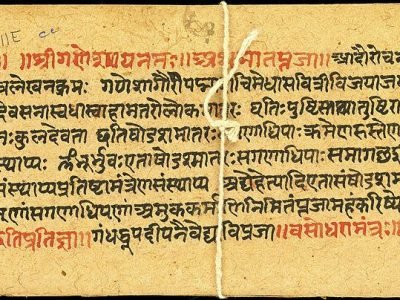
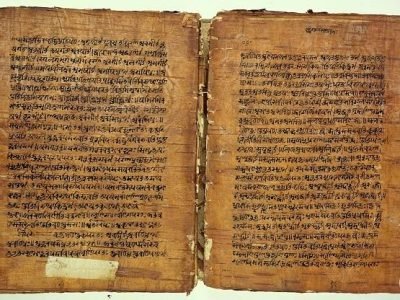

Rigveda
The Rigveda is the oldest of the four Vedas and one of the foundational sacred texts of the Vedic tradition, composed in ancient Sanskrit. It is a collection of over a thousand hymns that shaped early religious thought, ritual, language, and philosophy in South Asia, and remains central to the study of Hinduism, Indo-European linguistics, and ancient history.
Contents and structure
The Rigveda contains 1,028 hymns (sūktas) organized into 10 books (maṇḍalas). Most hymns are addressed to deities such as Agni (fire), Indra (storms and warfare), Soma, Varuna, and Ushas, while others explore themes of creation, cosmic order (ṛta), prayer, sacrifice, and the relationship between humanity and the divine. The text was preserved for centuries through an exceptionally precise oral tradition before being written down.
Historical significance
Scholars generally date the composition of the Rigveda to roughly 1500–1200 BCE, though individual hymns may reflect different periods and exact dating remains debated. It is among the oldest surviving texts in an Indo-European language and provides invaluable evidence for the religious practices, society, poetry, and language of early Vedic civilization.
Legacy and influence
The Rigveda has had a lasting influence on Hindu philosophy, ritual, literature, and later Sanskrit traditions. Several of its hymns—most famously the Nasadiya Sukta (Hymn of Creation) and the Purusha Sukta—have inspired centuries of theological, philosophical, and literary interpretation, while its language continues to be studied as a key source for understanding the development of Sanskrit and the wider Indo-European language family.
Quick Links
Information
Donation
Event
Holis
Pooja
Volunteer
Others
Blogs
About
Contact
FAQ
MahaAarti